
-
- List of National Operational Contact Points for SOPEP/SMPEP
- Notice for amendment of KR Technical Rules (Rules for the Classification of Steel Ships, Pt 1 & Pt 7 & Pt 9 & Other Rules and Guidance)
- Communication Guidance on VHF Communication Unavailability in Canadian Waters
- Establishment of the “Guidelines for Operating Hazard Analysis
- List of National Operational Contact Points for SOPEP/SMPEP
- Notice for amendment of KR Technical Rules (Rules for the Classification of Steel Ships, Pt 1 & Pt 7 & Pt 9 & Other Rules and Guidance)
- Communication Guidance on VHF Communication Unavailability in Canadian Waters
- Establishment of the “Guidelines for Operating Hazard Analysis
-
- List of National Operational Contact Points for SOPEP/SMPEP
- Notice for amendment of KR Technical Rules (Rules for the Classification of Steel Ships, Pt 1 & Pt 7 & Pt 9 & Other Rules and Guidance)
- Communication Guidance on VHF Communication Unavailability in Canadian Waters
- Establishment of the “Guidelines for Operating Hazard Analysis
PARK JinhoPrincipal Surveyor
KR Ship & Offshore Technology Team
1. Introduction
Marine operations conducted during the construction or maintenance phases of offshore wind projects involve significant risks. In particular, high-value equipment (wind turbines, foundation structures, cables, offshore substations, etc.) is exposed to a high likelihood of loss or damage during marine operations such as load-out, transport, and installation. Consequently, insurance is utilized to mitigate these risks.
For these high-risk marine operations covered by insurance (such as offshore wind transport and installation, large module transport, and towing of floating structures), the “independent third-party risk verification and approval process” required by insurers is referred to as the Marine Warranty Survey (MWS).
Based on WELCAR (Wellington Construction All Risk), which is used as a standard policy form in offshore construction, the JNRC (Joint Natural Resources Committee) Upstream/Renewables Warranty Endorsement and the Marine Warranty Clause/MWS Endorsement of specific insurers/programs require the appointment of an independent Marine Warranty Surveyor with extensive technical expertise and experience for marine transport, reassembly at sea, installation, and commissioning operation. Consequently, offshore wind construction projects are increasingly mandating the use of Marine Warranty Survey (MWS).
2. Market Status
As of late October 2025, the cumulative installed capacity of offshore wind power remains at a modest level of 0.12 GW. However, offshore wind development projects approved for electricity generation business licenses through the Korea Electric Power Regulatory Commission by November 2024 are approaching 30 GW (Table 1), and the government has set the 2030 offshore wind power deployment target of 14.3 GW, indicating that the offshore wind market is expected to grow substantially in the future. As the offshore wind market expands, the marine warranty survey (MWS) market related to offshore wind construction is also projected to grow accordingly.
Year | 2013 | 2015 | 2016 | 2017 | 2018 | 2019 | 2020 | 2021 | 2022 | 2023 | 2024 |
Permitted Capacity | 60 | 213 | 132 | 446 | 686 | 1,631 | 2,246 | 8,230 | 7,160 | 6,678 | 2,830 |
Cumulative Capacity | 60 | 273 | 405 | 851 | 1,537 | 3,168 | 5,414 | 13,644 | 20,804 | 27,482 | 30,312 |
Table 1. Annual Capacity of Approved Electricity Generation Business Licenses by Offshore Wind
(Unit: MW, Source: Korea Electric Power Regulatory Commission)
3. Marine Warranty Survey (MWS) Procedure
The role of the Marine Warranty Survey (MWS) is crucial in offshore wind project management. As independent third-party experts, Marine Warranty Surveyors are responsible for ensuring that marine operations in offshore wind projects comply with acceptable risk levels. Key responsibilities include verifying transportation and installation methods, conducting on-site inspections to confirm compliance with safety standards, assessing vessel and equipment suitability, and performing long-term project reviews (sometimes spanning several months) to ensure safe project execution.
The Marine Warranty Survey (MWS) process for the load-out, transport, and installation of offshore wind components proceeds in two stages, as shown in Figure 1.
- Technical Document Review
- On-site Attendance
During the Technical Document Review stage, the design basis and standards are examined, followed by a review of manuals, drawings, calculations, construction plans, and procedures developed based on these. If non-conformities are identified, corrective actions are requested; if compliant, a Warranty Review Letter is issued.
During the On-site Attendance phase, a site survey of the entire facility, including the yard, port, and vessel is first conducted. Pre-survey and pre-sail survey are then performed to verify the condition of the vessel and equipment prior to load-out, lifting, and departure. If these conditions are met, a Certificate of Approval is issued, and marine operations proceed. During the marine operations, the Marine Warranty Surveyor monitors whether the operations are being carried out in accordance with the pre-approved conditions, methods, and procedures.
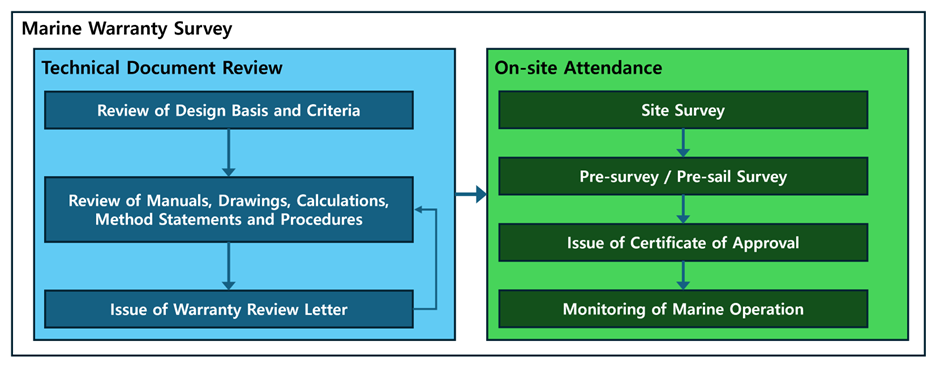
Figure 1. Marine Warranty Survey Process Stages
4. Criteria for Marine Warranty Survey (MWS)
To perform a Marine Warranty Survey (MWS), a basis and criteria must be established. Criteria related to marine operations follow a hierarchical structure comprising national regulations, standards, and guidelines issued by Marine Warranty Survey (MWS) organizations, which are applied in combination.
Korean laws related to marine operations include the Ship Act, the Ship Safety Act, the Framework Act on Maritime Safety, the Construction Technology Promotion Act, and the Occupational Safety and Health Act. Most laws focus more on occupational safety than on requirements for marine operations.
The standards include the following two: ISO 29400 (for offshore wind industry) and ISO 19901-6 (for offshore oil and gas industry).
- ISO 29400 Ships and marine technology — Offshore wind energy — Port and marine operations
- ISO 19901-6:2009 Petroleum and natural gas industries — Specific requirements for offshore structures Part 6: Marine operations
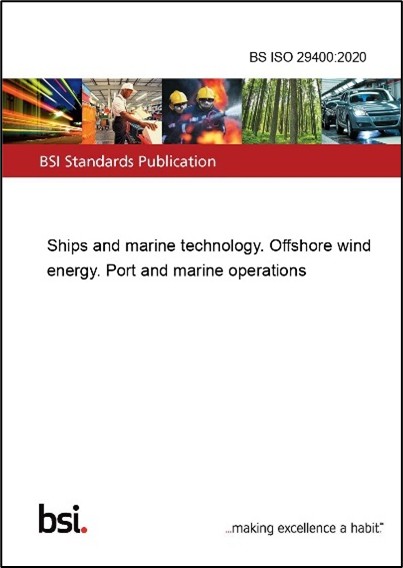
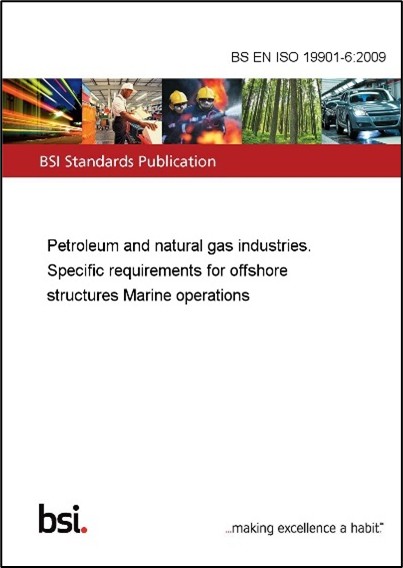
Figure 2. Standards related to marine operations
ISO 19901-6 is a standard that specifies methodologies for planning, designing, and executing marine operations in the offshore oil and gas industry. Prior to its publication, national codes, classification society rules, and industry guidelines were referenced and utilized. Reference codes varied by project, resulting in inconsistencies. Against this backdrop, it was first published in 2009 to ensure an appropriate reliability level for offshore structures worldwide in the oil and gas sector.
Even during the rapid growth of offshore wind power in the North Sea and Baltic Sea from the 2000s to the early 2010s, dedicated offshore wind regulations were absent, leading to the application of standards like ISO 19901-6. However, differences in characteristics between oil and gas offshore facilities and offshore wind power created a demand for a new standard. Consequently, ISO/TC 8 (Ships and marine technology) initiated the development of standards for port and marine operations targeting offshore wind, culminating in the first publication of ISO 29400 in 2015.
Subsequently, as experience within the offshore wind industry accumulated, floating offshore wind turbines (FOWT) were introduced, and the importance of cable operations increased, a technical revision was made in 2020, resulting in the second edition (ISO 29400:2020).
5. Introduction to the “Domestic Standardization of Offshore Wind
MWS Technical Guidelines” Project
As mentioned above, the complexity of regulatory frameworks—comprising regulations, standards, and guidelines—has caused significant confusion in the field within Korea, where offshore wind power is growing. This has led to problems such as construction delays, vessel waiting times, and increased project costs due to vessel replacements.
Accordingly, in February 2025, the Korea Institute of Energy Technology Evaluation and Planning (KETEP) commissioned the project “Domestic Standardization of Offshore Wind MWS Technical Guidelines.” A consortium of seven organizations, including Korean Register, was formed and has been actively implementing the project since August 2025. The project overview is as follows:
- Project Title: “Domestic Standardization of Offshore Wind MWS Technical Guidelines”
- Period: April 1, 2025 ~ March 31, 2028
- Participating Organizations: CGO Co., Ltd. (Lead), Korean Register, Korea Institute of Ocean Science and Technology, Zentech E&C Co., Ltd., Korean Port Engineering Corporation Co., Ltd., Seho Engineering Co., Ltd., Samsung Fire & Marine Insurance Co., Ltd. (Joint Performers), Hyundai Engineering & Construction Co., Ltd., Daewoo Engineering & Construction Co., Ltd., POSCO E&C Co., Ltd. (End Users)
- Scope of Work: Development of technical guidelines and application examples for load-out, transport, and installation in offshore wind projects.
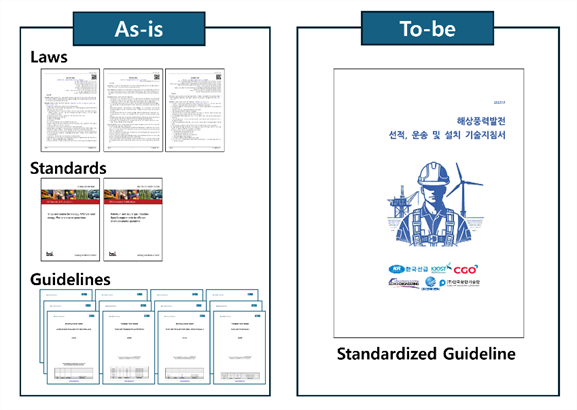
Figure 3. Before and After Introduction of Standardized Technical Guidelines
Upon successful completion of this project, load-out, transport, and installation operations will be performed in the field according to standardized technical guidelines, and Marine Warranty Surveys (MWS) will also be conducted based on these guidelines. This is expected to reduce risks during construction, prevent increases in the Levelized Cost of Electricity (LCOE) for offshore wind power, and ultimately contribute to the sustainable development and enhanced economic viability of the offshore wind power industry.