-
- KR achieves Class Tonnage of 80 million GT
- Korean Register releases SeaTrust-HullScan V3 software for ship design
- TRIPARTITE 2022 held at KR
- KR wins the Grand Prize of Industrial Promotion Award by Korea New & Renewable Energy
- KR publishes 「Guidelines for Rightship Inspection」
- KR hosts ISM/ISPS/MLC and PSC Regular Seminar
- KR achieves Class Tonnage of 80 million GT
- Korean Register releases SeaTrust-HullScan V3 software for ship design
- TRIPARTITE 2022 held at KR
- KR wins the Grand Prize of Industrial Promotion Award by Korea New & Renewable Energy
- KR publishes 「Guidelines for Rightship Inspection」
- KR hosts ISM/ISPS/MLC and PSC Regular Seminar
-
- KR achieves Class Tonnage of 80 million GT
- Korean Register releases SeaTrust-HullScan V3 software for ship design
- TRIPARTITE 2022 held at KR
- KR wins the Grand Prize of Industrial Promotion Award by Korea New & Renewable Energy
- KR publishes 「Guidelines for Rightship Inspection」
- KR hosts ISM/ISPS/MLC and PSC Regular Seminar

Writers
KIM Jinhee/Senior Surveyor, PYEON Kangil/Senior Surveyor, KOH Geon/Deputy Senior Surveyor
Machinery Equipment Research Team
1. Introduction
At the Marine Environment Protection Committee (MEPC) 77, guideline (Res.MEPC 340(77) *) related to the approval of the Exhaust Gas Cleaning System (EGCS) was released. EGCS is also known as a scrubber and is one of the ways to respond to regulations related to ship fuel oil content. This guideline replaces the guidelines (Res.MEPC 259(68)) that have been previously applied and are now used if there is a new scrubber or major change to the existing scrubber.
*Res.MEPC.340(77) 2021 GUIDELINES FOR EXHAUST GAS CLEANING SYSTEMS
In addition, regarding the EGCS discharge water regulation in some countries, for the purpose of preventing marine pollution caused by EGCS, the guideline for the EGCS discharge water risk and impact assessment was released at the MEPC 78. This is for the consistent application of regulations regarding EGCS discharge water. In accordance with this guideline, the administration of each country may request the submission of data to ships equipped with EGCS for the purpose of evaluating the risk and impact of EGCS discharge water.
Therefore, the technical information developed by KR with KTR (Korea Testing & Research Institute) will guide the shipping company's personnel and ships to know about the documents released above. This document is composed of EGCS approval test procedures and the latest trends and guidelines related to EGCS discharge water. It aims to provide technical support to the shipping industry by explaining complex regulations as efficiently as possible.
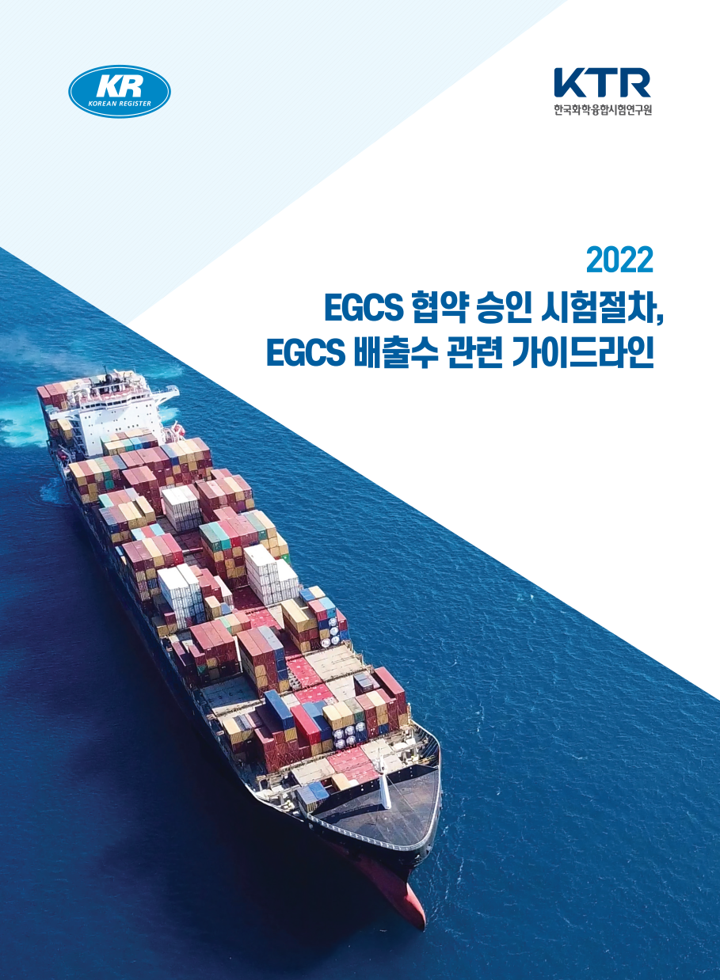
Figure 1. Technical information document for EGCS Approval Test Procedure and EGCS discharge Water
2. Approval test procedures for EGCS
The EGCS approval procedure described in the Res.MEPC 340(77) can be classified into Scheme A and B methods. Scheme A method checks whether the certification value presented by the manufacturer is satisfied or not, continuously measures the parameters related to exhaust emission during ship operation, and periodically reviews the certification value. Scheme B is a method of monitoring the performance of SOx reduction through a monitoring system installed on a ship and temporarily measuring parameters related to exhaust gas emissions.
This document describes approval options for EGCS, ETM-A requirements, emission measurement methods, onboard verification procedures, and the renewal or issuance of IAPP certificates related to the Scheme A method. Also, this explains the ETM-B requirements, onboard verification procedures, and the renewal or issuance of IAPP certificates related to the Scheme B method. It also mentioned emissions tests, documents subject to approval, and other detailscommon to Scheme A and B methods.
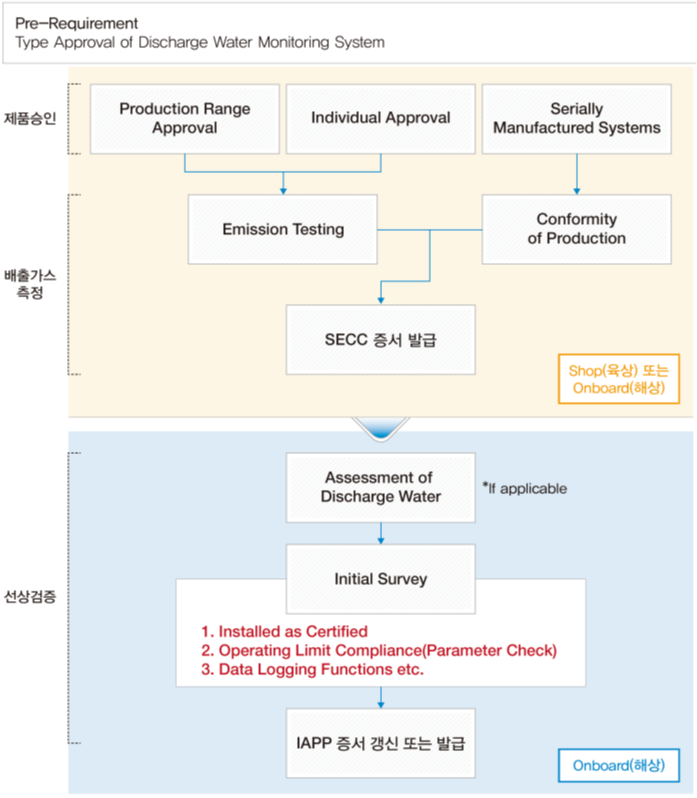
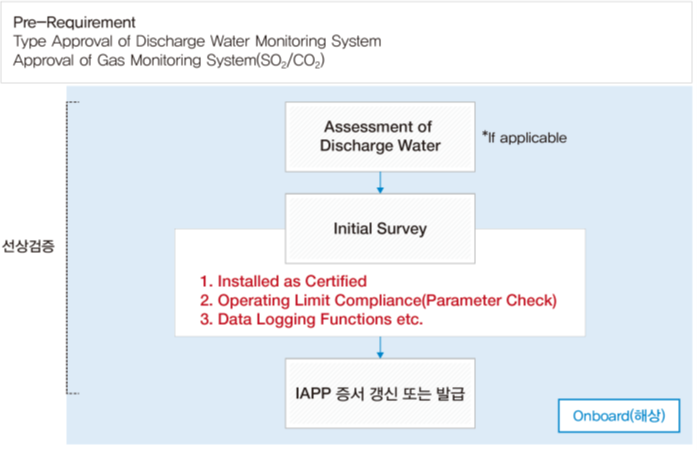
Figure 2. Scheme A approval procedure Figure 3. Scheme B approval procedure
3. Latest trends and guidelines related to EGCS discharge water
Regarding EGCS discharge water, the procedure and method for collecting data comprised in Res.MEPC.340(77) are mentioned in this technical document. The EGCS discharge water standards will be reviewed in the future. Accordingly, the administration can request the ship to sample and analyze the discharge water for collecting the discharge water data.
Member States that have conducted the risk and impact assessment of EGCS residues must inform IMO of the assessment results and regulations related to EGCS residues and may require the provision of the necessary information to perform the hazard assessment and impact assessment.
In this technical information document, the method of risk and impact assessment of EGCS discharge water introduced in MEPC.1/Circ.899 guidelines were described. The data that may be required to be submitted from the ship's point of view and the main contents of each evaluation were also summarized.
This technical document also includes guidelines for port reception facilities unloading of EGCS residues mentioned in MEPC.1 Circ.900 guidelines. It describes appropriate management and treatment cases in the process of transferring residues generated by EGCS to port reception facilities.
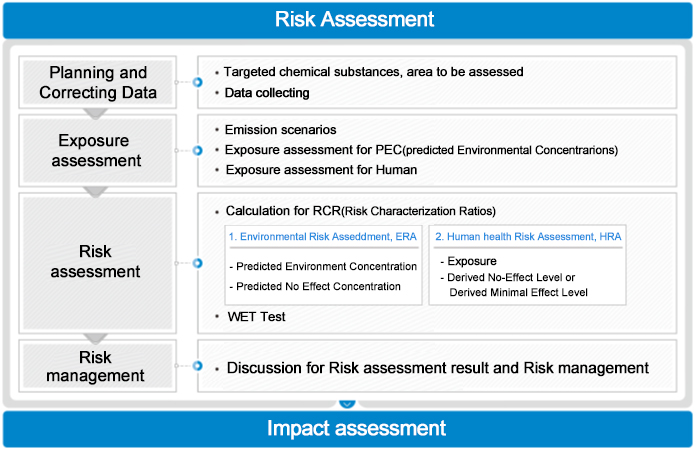
Figure 4. Process for risk and impact assessment of EGCS discharge water