
YUN Gwangho, PARK Jaecheul, LEE Gapheon
AI Convergence Research Team
The power supply through the Cargo Switchboard (CSBD) is essential for the operation and cargo handling of large merchant ships such as container ships and LNG carriers. An analysis of CSBD operating costs indicates that 28% of the total life cycle cost is attributed to concept development, design, and production, while the remaining 72% is spent on maintenance. This highlights the critical importance of cost reduction during the maintenance phase.
As shown in Figure 1, when examining preventive diagnostics for failures based on causes, applying the CBM (Condition Based Maintenance) methodology can prevent 34.4% of all incidents. This suggests that implementing CBM can lead to significant cost savings over the switchboard’s lifecycle.
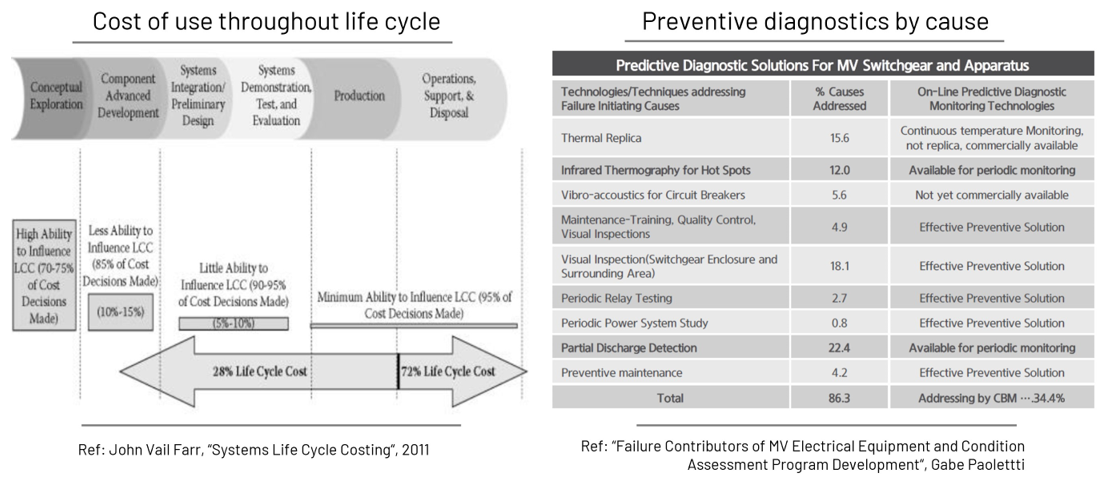
Figure 1. CSBD’s Cost of Use Throughout Life Cycle (Left),
CSBD’s Preventive Diagnostics by Cause (Right)
Furthermore, with the rise of autonomous vessels and other factors leading to a potential decrease in crew members, there is a growing need for technologies that can take over the monitoring and anomaly detection tasks traditionally performed by crew members on CSBD. In response to these needs, KR has developed failure diagnosis software for CSBD utilizing the CBM methodology through the generation of failure data, the development of diagnostic algorithms, and the software development process.
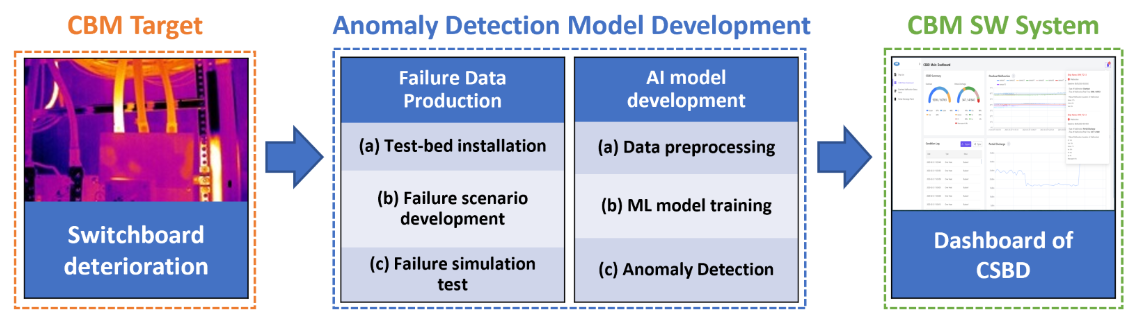
Figure 2. Overview of Failure Diagnosis Software Development for CSBD
Failure data is essential for developing failure diagnosis algorithms. However, shipping companies lack sufficient infrastructure for collecting, transmitting, and storing operational data from CSBD. And they typically operate PMS (Planned Maintenance System) on board, replacing components before failures occur. Additionally, although CSBD manufacturers have test beds, they are used for new product development or performance improvements, making it difficult to obtain failure data for CSBD.
To address this, KR installed UHF sensors and HFCT sensors for the partial discharge detection, as well as wireless temperature sensors to detect overheating failures on CSBD. Subsequently, based on analysis of past failure cases and FTA, KR developed and conducted eight failure simulation experiment cases, including breaker contactor’s overheating, insulation deterioration, and control unit malfunction, producing failure datasets in a time-series format.
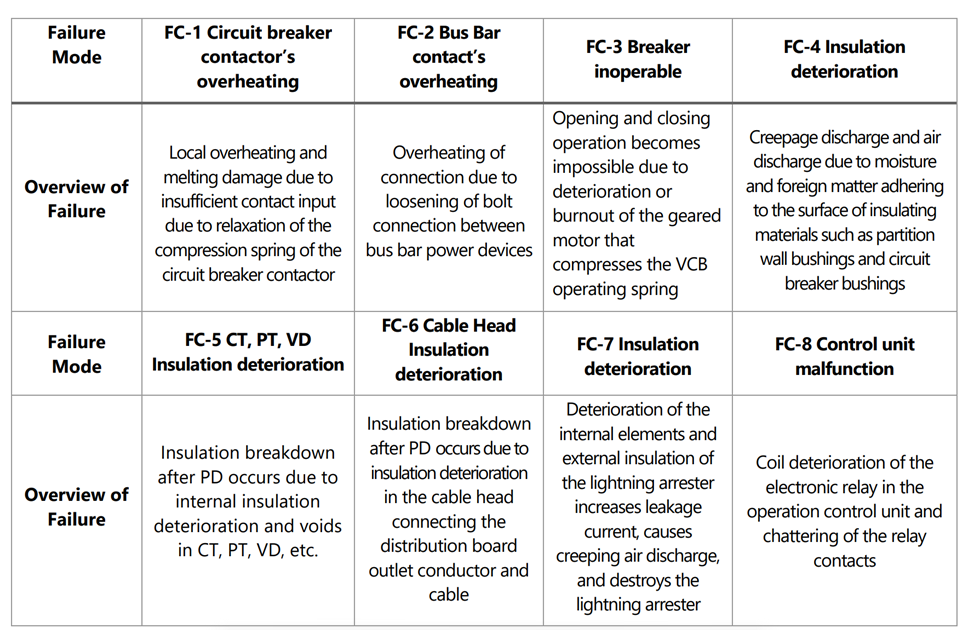
Table 1. Experiment Cases of Failure Mode
Using the two types of generated time-series data (overheating failure data and partial discharge data), KR developed failure diagnosis algorithms for CSBD. Preprocessing was conducted to prepare this data for training a classification model based on AI.
First, the temperature data from each sensor was converted to absolute temperature through K-calibration to enable comparison of the data on the same scale. Next, noting that the temperature balance of each part is disrupted when a failure occurs, the data was processed into a training dataset by extracting “Phase Imbalance” and “Locational Imbalance” features. After training the artificial neural network-based classification model with this data, it achieved an accuracy of 99.57% and F1-score of 99.57% on the test dataset. The model was confirmed to be stably trained without overfitting or underfitting, as shown in the Epoch Loss and Accuracy graphs in Figure 3.
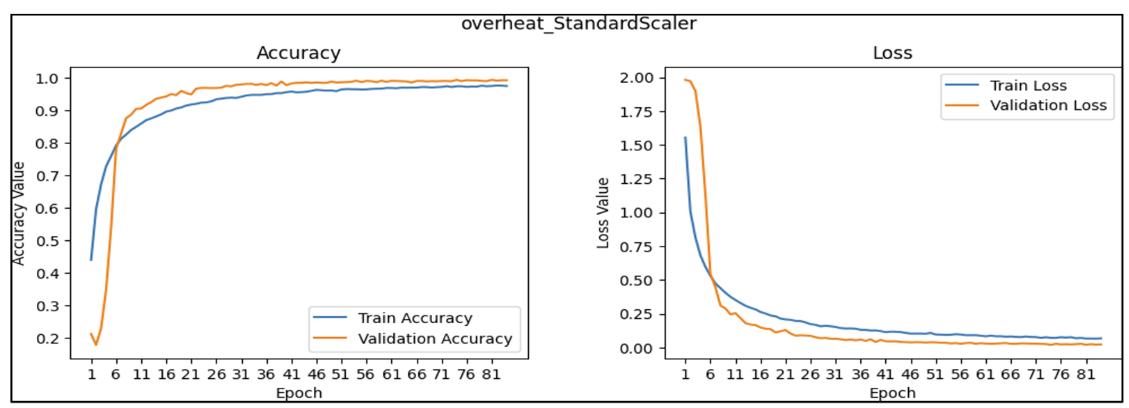
Figure 3. Overheating Failure Classification Algorithm - Accuracy Graph (Left) and Loss Graph (Right)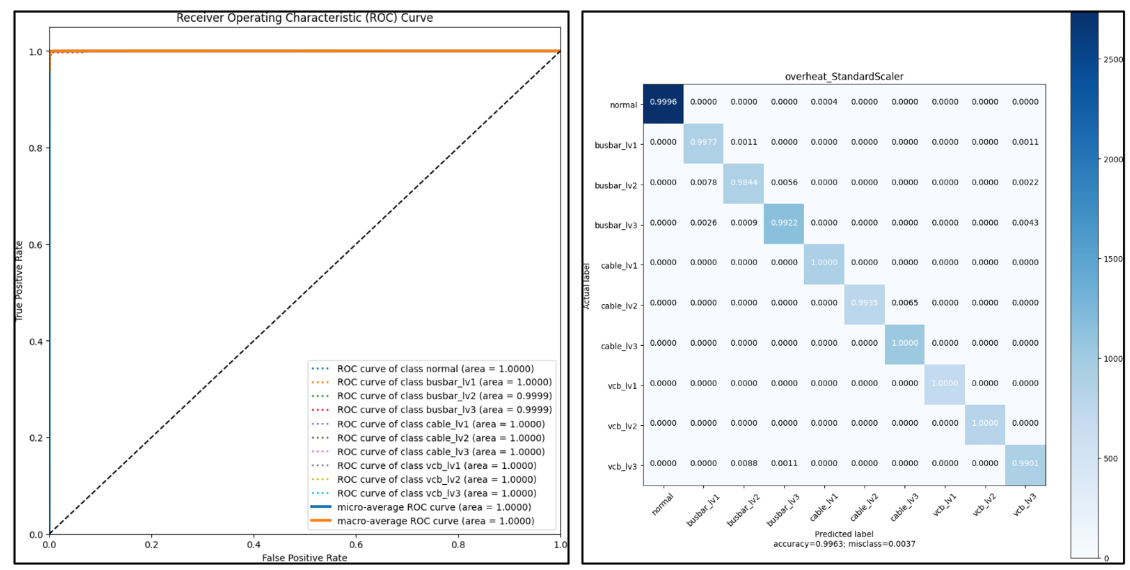
Figure 4. Overheating Failure Classification Algorithm – ROC Curve (Left) and Confusion Matrix (Right)
The partial discharge failure data consists of 256 columns and 4 channels of 60Hz time-series data. Using all the data as input would require excessive computing power during the training and inference stages. Therefore, through data analysis, we selected channels and columns that best highlighted failure characteristics, reducing the raw (256, 60, 4) dimensional data (64, 60, 2) dimensions, which was then trained on the artificial neural network-based model.
The training resulted in accuracy of 96.04% and F1-score of 96.06%, and the model was confirmed to be stably trained without overfitting or underfitting, as shown in the Epoch Loss and Accuracy graphs.
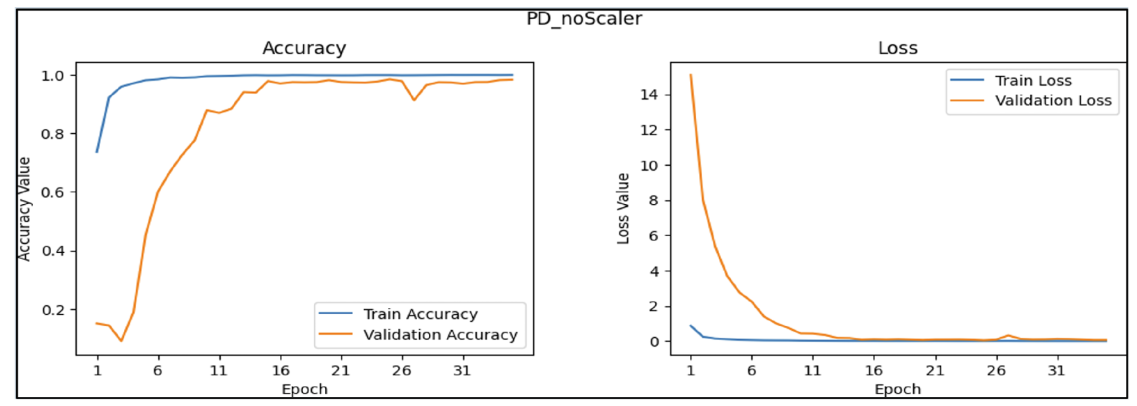
Figure 5. Partial Discharge Failure Classification Algorithm - Accuracy Graph (Left) and Loss Graph (Right)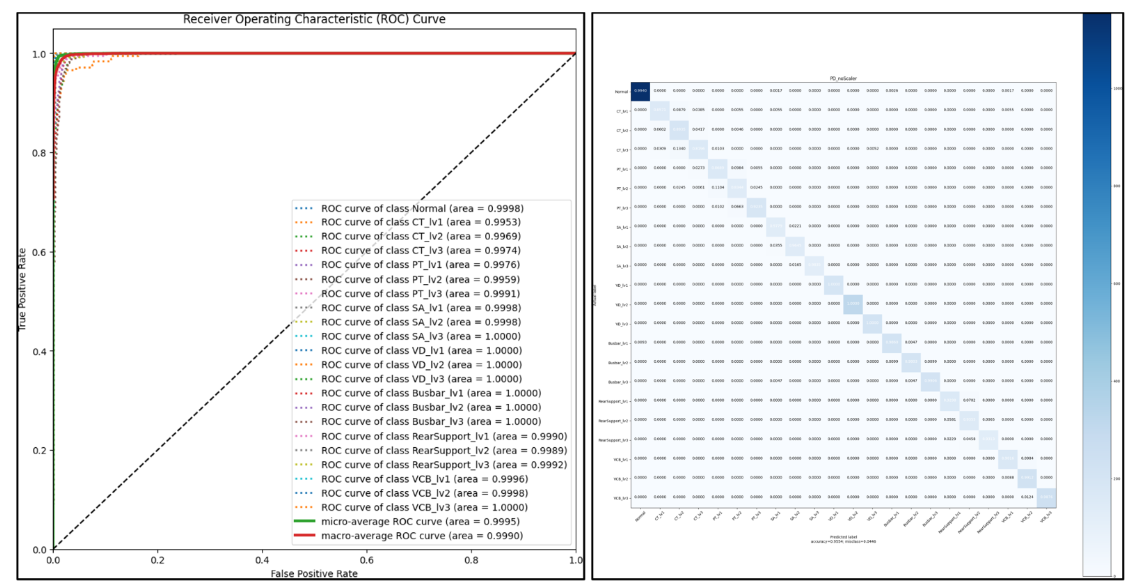
Figure 6. Overheating Failure Classification Algorithm – ROC Curve (Left) and Confusion Matrix (Right)
Based on the developed failure diagnosis algorithms, KR developed failure diagnosis software for CSBD, composed of four pages as shown in Figure 7, to perform failure diagnosis upon data uploaded.
The first page, the Ship List page, allows users to input the ship’s information and start data upload and analysis. When registering a ship, users enter the ship name, IMO number, CSBD type, ship type, flag, GT, and DWT. After data upload, the analysis results can be viewed on the CSBD Main Dashboard, where trends in each sensor’s time-series data are displayed as graphs, and diagnostic results can be viewed through semi-circle charts and tables.
Finally, the Overheat Malfunction Status Trend Page and Partial Discharge Status Trend Page provide detailed graphs of the time-series data for each sensor, allowing for an in-depth review of sensor values over time.
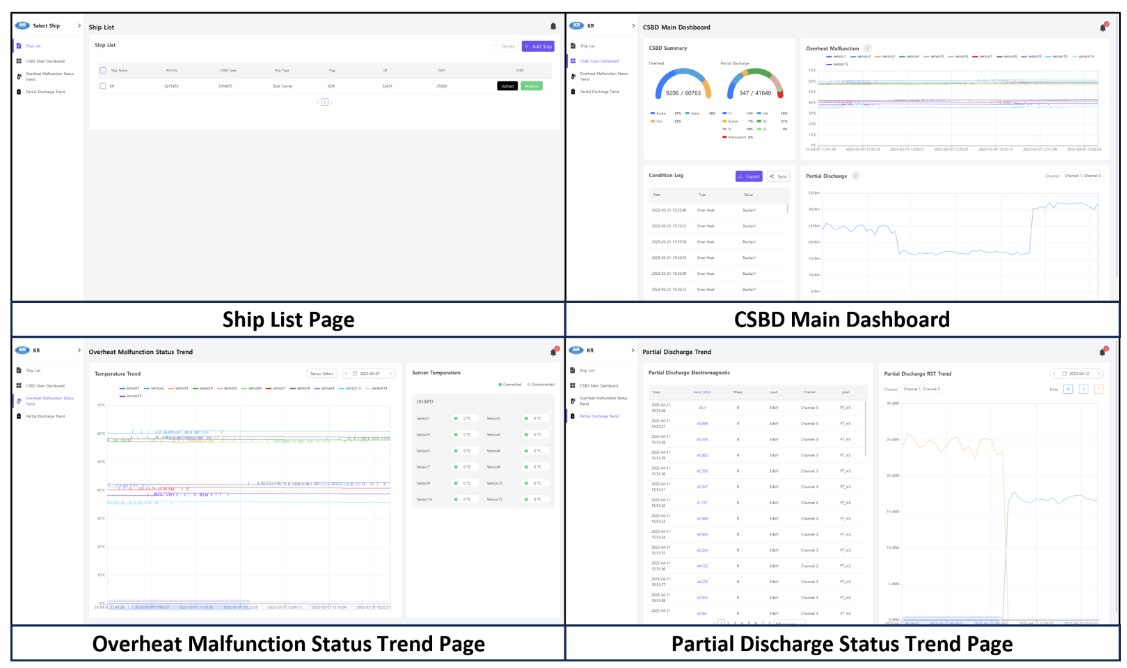
Figure 7. Failure Diagnosis Software for CSBD
However, deploying the developed software on ships poses a challenge due to the difference between the environment of the CSBD on board and the environment in which the model was trained, leading to the domain adaptation issue that can reduce the performance of model. To address this problem during the algorithm development phase, strategies for improving generalization performance are required. It is necessary to develop a baseline AI model using failure datasets, and to improve it through unsupervised learning or transfer learning to minimize performance degradation when applied to ships.