

ICT Solution team
1. Abstract
From the design stage to the construction of a ship, the structural strength of a vessel must be confirmed in regards to the design specifications or operating conditions. Assessing the structural strength of a vessel can be done relatively accurately but making and analyzing the ship model does take a very long time. Grillage analysis, on the other hand, can analyze a vessel’s structural strength more promptly, creating a simplified model of a complex structure. As a result, Korean Register (KR) has launched SeaTrust-Frame3D, Korea’s first official grillage structure evaluation software for ships.
|
Feature |
SeaTrust-Frame3D |
software A |
software B |
|
Convenience |
High |
Low |
Normal |
|
Calculation |
Fast |
Slow |
Fast |
|
Buckling |
Possible |
Impossible |
Possible |
Table 1: Comparing SeaTrust-Frame3D with other software
Compared with other similar software, SeaTrust-Frame3D is much more convenient because it reflects the latest software development trends. In addition, the program provides fast calculation speeds and a rule-based buckling evaluation.
2. Main fields of SeaTrust-Frame3D
Grillage analysis is mainly used when a vessel’s structural strength needs to be checked against various design specifications or when operating conditions need to be quickly confirmed in the production process. The main fields of grillage analysis are:
- FP/AP, Engine room PSM scantling
- Mooring fitting sub structure
- Reinforcement of outfitting
- Checking the structural strength of yard structures
- Docking/Re-docking
- Prediction of structural strength before DSA
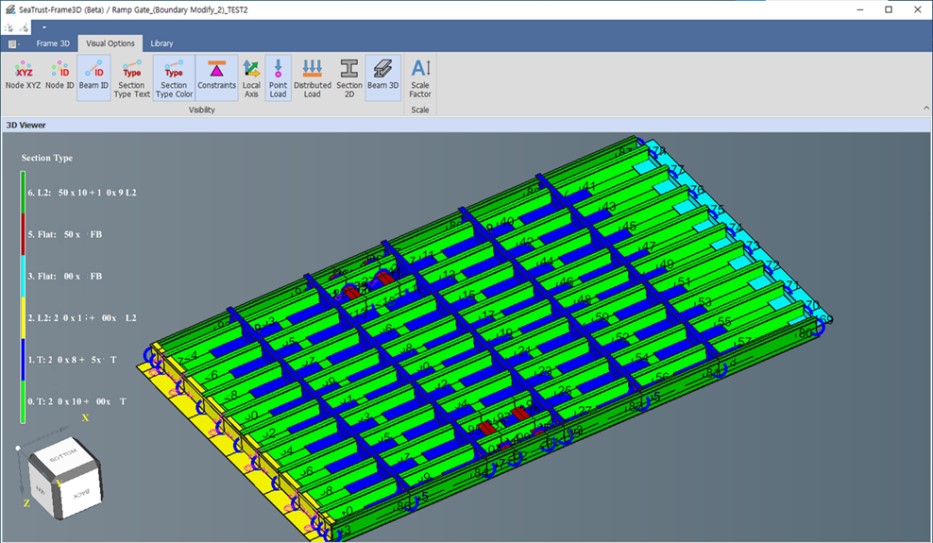
 Figure 1: Example of grillage analysis
3. Background
- Structural analysis is conducted based on Timoshenko’s Beam theory.
- Section properties such as the first moment and second area moment are calculated based on the shape inside the software. Section properties are then compared and verified with commercial software.
- Bucking assessment is conducted based on KR or CSR (Common Structural Rules) rules.
- There are various calculation methods for the shear center. While the shear center is calculated using the CSR rule. other sections are calculated by SeaTrust-Frame3D directly.
4. Main functions and features
- Grid-based graphic modeling
- 3D visualization and viewer
- Interface: Text file, Excel sheet, CAD (IGES, BDF, DXF)
- Load: Concentrated load, Distributed load, Continuous load, Combination and Load Case
- Boundary condition: Translation and rotation constraint, Spring Support and Connection, Rigid Body
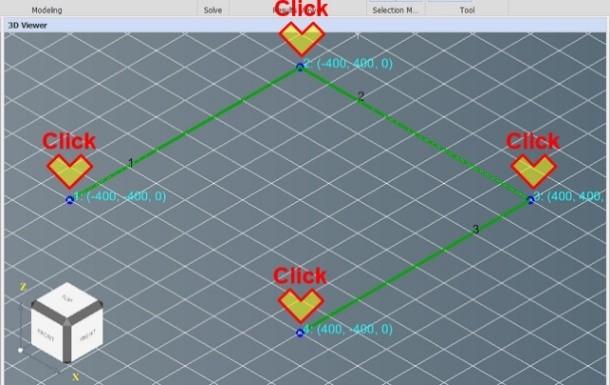
 Figure 2: Example of element modeling
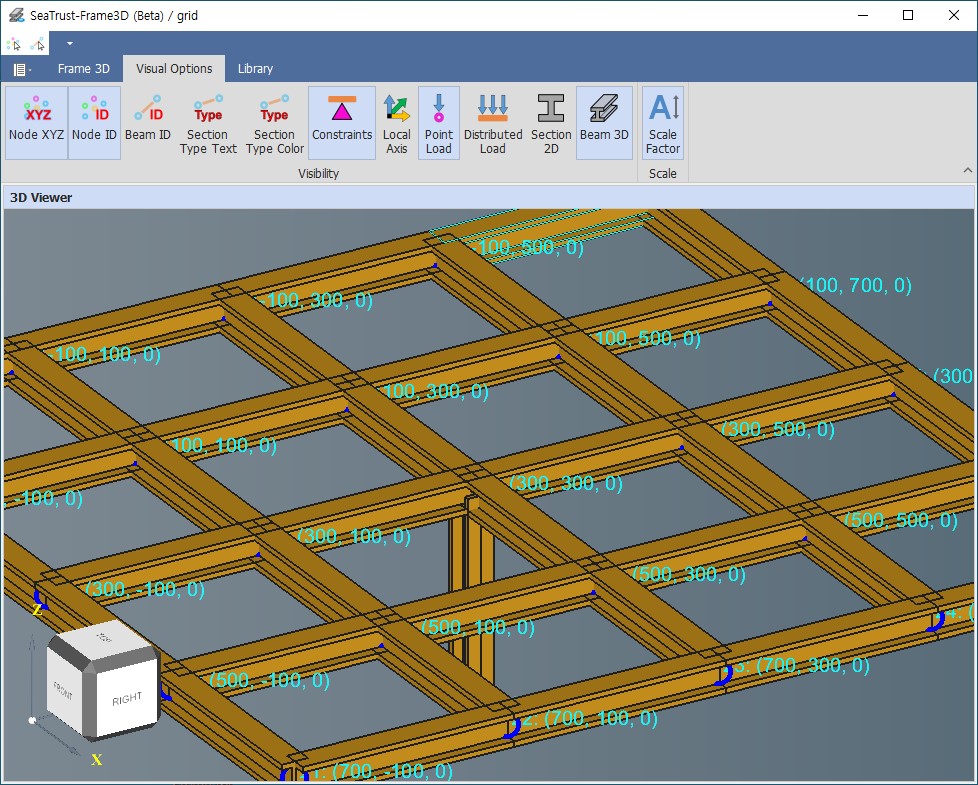
 Figure 3: 3D visualization of 1D element
- Nine section profiles for parametric modeling: T, Angle, L2, L3, H, Flat, Pipe, Channel, Box Type
- A library of 39 standard angles
- Section auto-naming
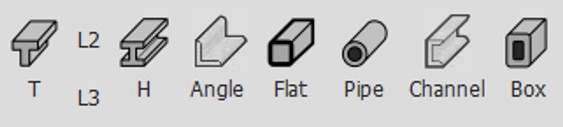
 Figure 4: Section profiles for parametric modeling
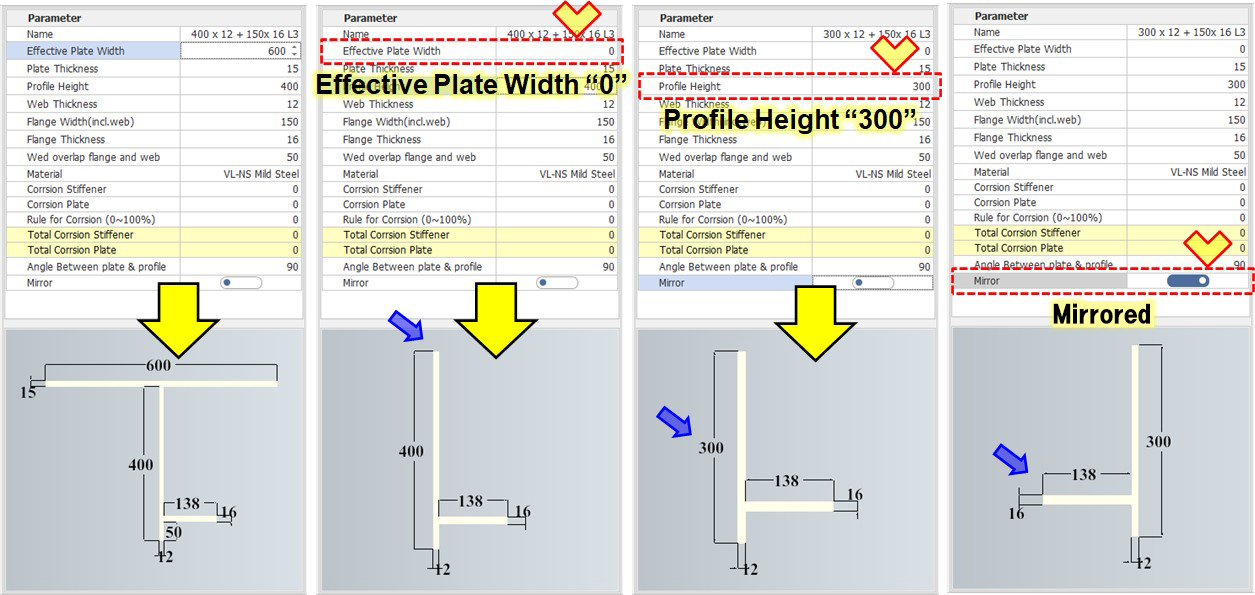
 Figure 5: Examples of parametric modeling
- Automatic calculation for section properties and results of structural analysis
|
Section properties |
Results of structural analysis |
|
ü Moment of Inertia ü Torsional Constant ü Torsion Section Modulus ü Section Modulus ü Neutral Axis ü Section Max Distance ü Section Area, Shear Area ü Others |
üAxial Force & Shear Force ü Torsional Moment & Bending Moment ü Displacement & Rotation ü Axial Stress & Shear Stress ü Torsional Stress & Bending Stress ü Normal Stress ü Buckling |
Table 2: Kinds of section properties and results of structural analysis
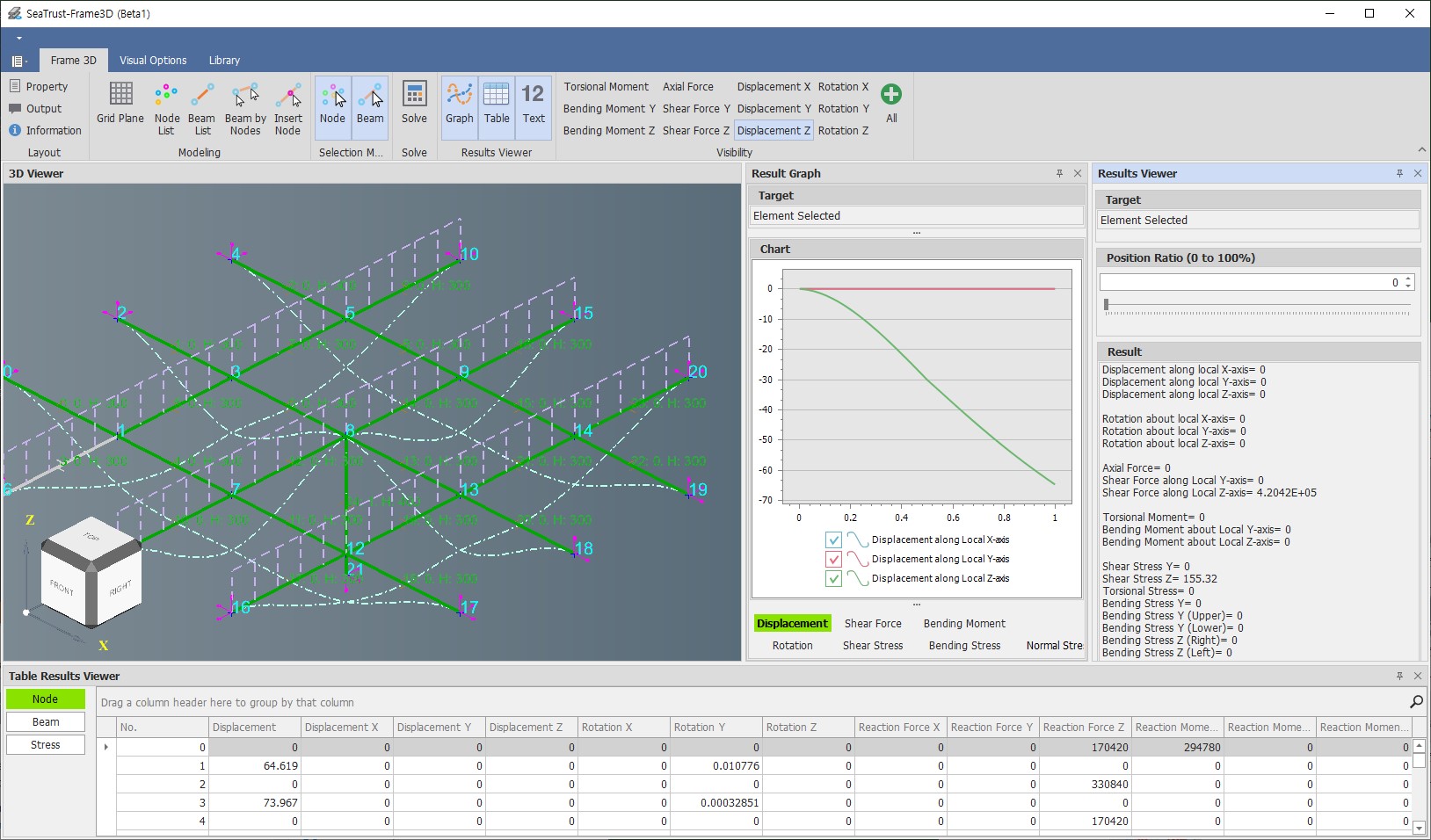
 Figure 6: Results displayed as 3D, colors, table, graph and text
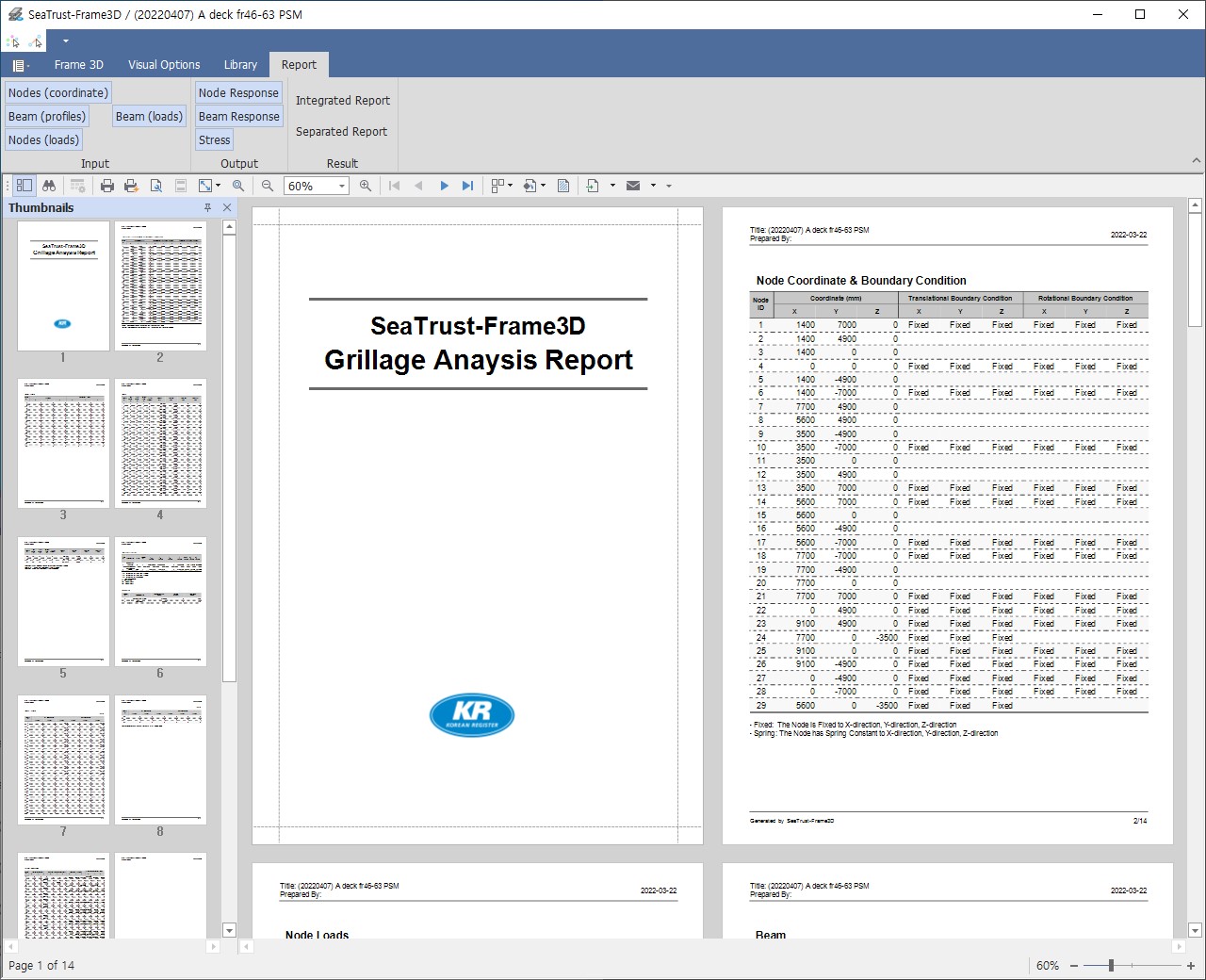
 Figure 7: Auto reporting
5. Conclusion
Having previously relied on overseas ship grillage analysis software, KR has now independently launched its own grillage structure evaluation software for ships, known as SeaTrust-Frame3D. With the launch of this software, KR is able to provide customer-oriented technical services directly to those working in the field. The society plans to continuously upgrade the software to meet customers’ needs and enhance its usability. It is also working on upgrading the software to apply KR’s classification rules even more efficiently than it is today. KR expects the software to be used extensively in shipyards as it offers valuable insight and support throughout the ship construction process.